
 In 1950 George VI was on the throne. Northern Ireland was governed by Unionists under the leadership of Lord Brookeborough.
We never discussed politics at home or at least not in front of the children so we were oblivious to the nuances of the time. Until the attack at the bus depot, which I reckon was in 1956, we didn’t knowwhat was going on in Northern Ireland politics. We were, I think what is now referred to as Castle Catholics. We were happy with the status quo but others around us were awakening to the fact that there was a need for change. Lord Brookeborough had in 1950 been Prime Minister for nearly 20 years. The explosion at the bus depot was the start of a bombing campaign along the border. I remember being in bed and hearing the loud explosion. The lights dimmed and we were all very frightened. However, the campaign fizzled out and for many years things remained calm, until a young preacher called Paisley appeared on the scene. He formed the Free Presbyterian church in 1951 and his sermons mostly focused on his contempt of Roman Catholicism and homosexuality. He didn’t get involved in politics until the late fifties, but he was to feature in the instability of Northern Ireland through the thirty years of the troubles.
The G.A.A. was an integral part of life growing up in Rostrevor. Weekly football matches provided entertainment. My dad was a staunch GAA supporter and I accompanied him with my brothers to matches in Croke Park. I was there, when in 1961, Down won the all Ireland championship and brought the Sam Maguire Cup across the border. I remember waiting in Newry for the bus returning with the team and the cup. Unfortunately my interest in sport waned from then on but my dad and my brothers were staunch Down supporters. I was unaware of the fact that Gaelic football was a sport confined to the catholic community until I was a lot older.
I was actually very lucky being born in 1949. The war now over, the Labour  government, with the vision of Aneurin Bevan introduced the National Health Service. The welfare state was introduced in the UK in 1948 and my siblings and I were able to enjoy the benefits of free education. Those, living in the United Kingdom, were now able to avail of free health care, from the cradle to the grave. With free education the way was open for those who wanted to better themselves and to challenge those who had held the majority of power at Stormont for almost 40 years. Unfortunately that didn’t work out to well and it was nearly thirty years before the Good Friday agreement was put in place guaranteeing equality for all citizens of Northern Ireland. However that agreement has stumbled along half heartedly and as a result has come to a stalemate and we are back to the pre 1998 days.
I had to avail of the health service earlier than I would have wanted, when at age of seven, I was rushed to hospital with a septic appendix. I knew even at age seven I was seriously ill when a priest appeared at my bedside and administered the last rites. Never thought much of the Catholic Church after that. My opinion would be justified in years to come. What were they thinking? Frightening a seven-year old! Unlike today, when most patients are discharged within twenty-four hours, I remained in hospital for two weeks, followed by bed rest for another two weeks at home. Visiting hours were extremely strict. I remember to this day feeling that while in hospital I had been abandoned by my parents and refusing to 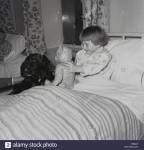 speak to them when they did visit. Thankfully visiting restrictions were lifted or at least relaxed which made my second stay in hospital at the age of ten less traumatic. The local doctor called quite often during my convalescence and the district nurse called every day and administered intravenous antibiotics. Due to some misunderstanding the district nurse didn’t stop after two weeks and I received the injections for nearly a month.
My dad was the local town surveyor and many times I accompanied him while he worked. I often went with him to a water source at Kilfeaghan. A trek by car up the side of the mountain and then across a river. Then a long walk to make sure that the good people of Warrenpoint were not having any water problems. Well, with their drinking water anyway. At the top, in a ramshackle cottage lived a farmer called Dan White. He lived there through all weathers with his collie. He grew potatoes in the clean mountain soil. We left with bags of them and they were delicious, boiled in their skins and eaten with a knob of butter nothing like them in the shops today. He would walk into Rostrevor to do his shopping, carrying a large stick and with a large rucksack over his shoulder. His collie dog by his side. He smelt of burning wood from the fire in his cottage. I recently discovered that Dan’s cottage has been renovated and can now be rented out. A beautiful location for a holiday.
Check out Dan White’s Cottage on Facebook or at 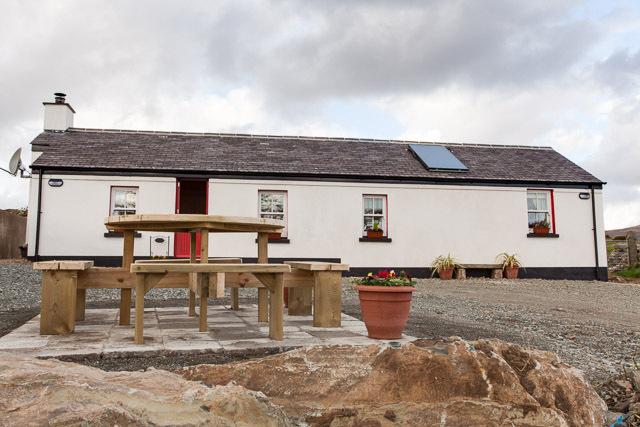 https://www.facebook.com/DanWhitesCottage
We also had two lovely district nurses in Rostrevor in the fifties. One was my aunt, who sadly died from Motor Neurone Disease in the sixties but while she was able they used to take us girls from the local area on outings to a cottage beside Dans. We had picnics, played games and enjoyed the mountain air. A makeshift swing hung from one of the trees and many happy hours were spent swinging and pushing others. I dread to think how many of us piled into the cars that took us there. It was also my first introduction to an outside chemical toilet. After using it for the first time it became the practice to go before I came out or wait until I got home.
While on the mountain with my dad he used to scare us by telling us about an American plane that crashed in a bog on the mountain. He told us that their ghosts roamed the area and we had better watch out. It was very quiet up there and we were very gullible. It was also extremely marshy and I can remember many heart stopping moments when my wellies sunk into the bog. In later years I did learn that there was some truth in this and that an American plane had indeed crashed in the Mournes, only closer to Annalong. It was beautiful up there and we loved the feeling of freedom. 
Being the eldest in the family I tended to accompany my dad quite a bit and one of our trips during the period of rationing in Northern Ireland was to cross the Lough in a small boat to a ‘pop up shop’ opposite Narrow Water. There we could buy sugar, butter and other rationed items. I think my dad bought cigarettes although he wasn’t a big smoker but he did enjoy a cigar on a special occasion. There were no customs to check on the purchases unlike when we crossed the land border. Another crossing was from Warrenpoint to Omeath but that was usual for an afternoon out and a visit to cousins who had a pub and a hotel there. My cousins owned the Park Hotel and I remember spending a week there. Not exactly the Costa Brava but it was a change. We could look across the Lough and see home. A fact that may not be well-known is that Padraig Pearse drafted the 1916 Proclamation while a teacher at the local Irish College, now the Park Hotel.
I also accompanied my father on a survey of the outlying districts of the area one summer in 1956 /57. We visited tiny little cottages where peat fires were lit in the kitchen and the lady of the house wore a long black dress with a shawl. Chickens wandered in and out of the kitchens, there was no electricity and the toilet was an outhouse at the back. Coming from ‘the village’ I was amazed at the living conditions not realising how hard life was for them as they tried to make a living from the land. The lanes and fields round these cottages smelt of wild flowers and on a sunny 
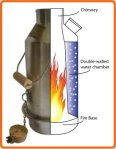 summer’s day it was idyllic. We brought a Volcano kettle with us and dad made us tea and we ate mikado biscuits.. Some things don’t change. You can still buy both the mikado biscuits and the Volcano kettle.
There were here many religious rituals in Rostrevor in the fifties and sixties. Palm Sunday and we paraded with pieces of palm supposedly brought from the Holy Land. Corpus Christi, when there was a procession through the village to the Convent of the Apostles. Holy Thursday when I think we scattered petals. Christmas when we sang in the choir. We sang the mass in Latin in four parts and it was wonderful. After tea every evening we would be called by my dad to say the rosary. My brothers and I would kneel behind the couch were my dad couldn’t see us and we would giggle and carry on until he realised what was going on.
In November we had ‘devotions ‘every night in the local chapel and many nights I walked home on my own. On one occasion in November I was on my way home when someone rushed out of a shop visibly distressed. President Kennedy has been shot, they shouted. I was terrified. Did the Russians shoot him? This was, after all, the time of the Cold War. Did this mean war? By the time I reached home he was dead. My father had tears in his eyes as we clambered around the television soaking up any news that  would mean that the assassination wasn’t going to result in a war. The following days were tense until it was established that on the face of it the Russians weren’t involved.
I remember life in the fifties as colourless. Everything was painted brown or green. The floors were covered in oilcloth. Everything symbolised the austerity of the time. Furniture was heavy and dreary, no bright colours. No Ikea in those days. Rationing was still in force and Britain was recovering from the war. Flower power, the Beatles, Hippies, Mods and rockers were yet to influence us.

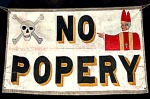 told another neighbour that it was ‘ such a shame to see Catholics moving into the gardens’ She assumed we were both Catholic. Many years later I had to send her a solicitors letter as she started making wild accusations about us. But that’s a story for another day.
  to have heat it was impossible to set them and as a result they were either belting out heat on a mild day and not enough on a cold day. However it would be another couple of years before we could afford central heating.
 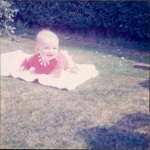 arrived. Husbands
 underground shelters to house government officials and a cross section of the population until the climate had stabilised, a solution reminiscent of the finale of
  many , following the same theme: boy finds girl, boy loses girl: boy serenades girl with romantic songs and wins girl back. Slushy but innocent and very appealing to adolescent girls. It wasn’t a huge surprise to hear that he had died but such a loss. Great stage presence and wonderful voice.
 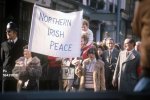 source at CAIN and discovered just how violent it was. 1976 was the year that the young Maguire children and their mother were mowed down and killed by a car driven by an IRA member, when the car he was driving went out of control after he had been shot. This lead to the setting up of the women’s peace movement.
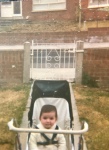 Louise but every pregnancy is different and so I put it down to that.
  worked long days and then had to study. So a decision was made that we should start looking for a house back in Belfast where I would be nearer friends and he’d have a shorter distance to travel.
 Six civilians, five Protestant and one Catholic, died as a result of a Loyalist paramilitary attack on the Ramble Inn, near Antrim, County Antrim. The attack was carried out because the public house was owned by Catholics.

 Christmas and New Year had passed quietly because of the ceasefire. It was such a great feeling to know that for a few days at least the New Year could be celebrated without fear of violence
 one car and we lived about a two-mile walk to the village. I was definitely fit in those days. Every afternoon the baby was wrapped up and pushed in a large ‘Princess’ pram

 on my many visits. The Boyle family ran it as a family hotel and the beach with its wrecked boat became an iconic place to have a photo taken. My family was there, so we had some built in baby sitters – a luxury for us.
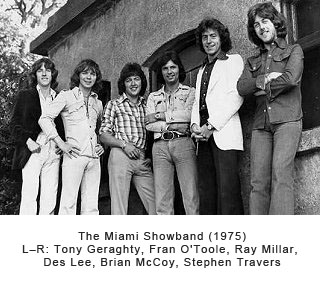
 Three Protestant civilians were killed in a bomb attack, carried out the People’s Republican Army (PRA), a covername used by the Irish National Liberation Army (INLA), on the Central Bar, Gilford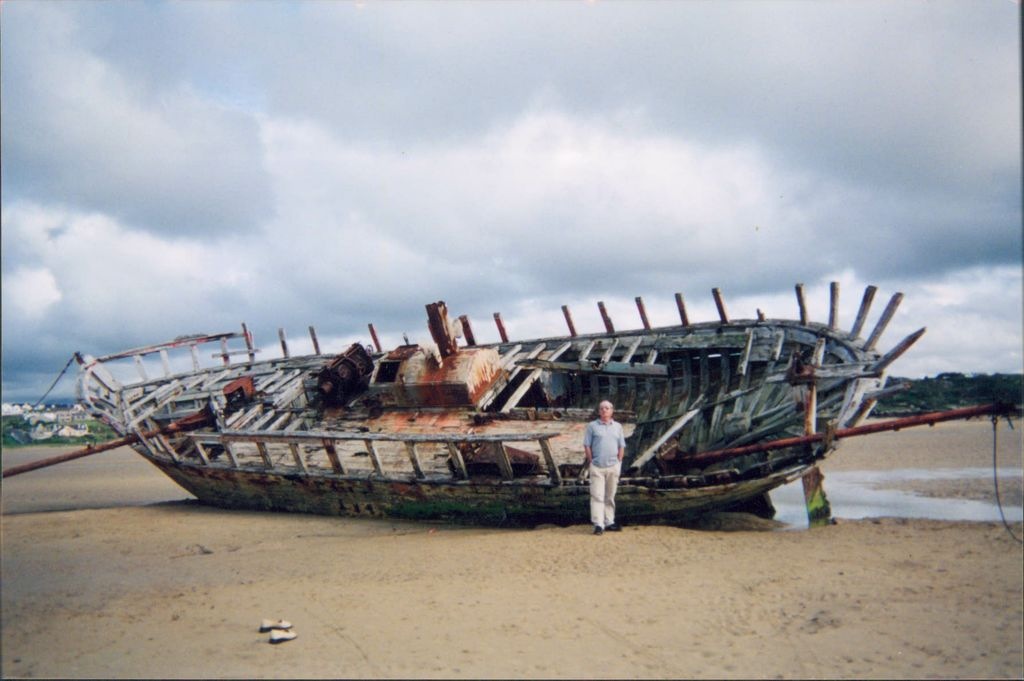
 colours. It was great to be mobile but it did prove problematic with only one car ( the norm in the 70’s ) so we spent our time organising lifts when one of us wanted the car. I think it was 2000 before I got the keys to my very own car.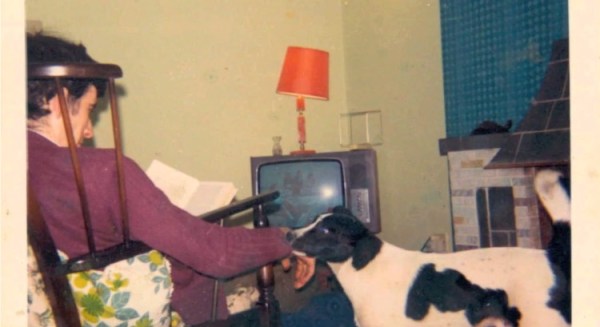
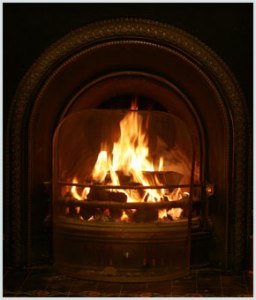 front door and were greeted with a lovely warm house was a day to savour. Had to wait a bit longer for the twin tub however.
 little plants punched their way though the soil. Not long now and we’ll be eating our own produce, we thought. But the rabbits had other ideas and we came out one Spring morning to find that apart from the potatoes there was nothing left. The Good Life worked for Tom and Barbara but not for us.
 shots being fired and the bang of the petrol bombs as they hit their target. Over the year the number of killings increased. These included civilians, soldiers and policemen.
 something she told me she learned from her brothers at a very young age, and she also liked a whiskey. When visiting Rostrevor when we were children one of us would take her up to the village and on the way past the pub she would pop into the snug and have her wee tot of whiskey. We were sworn to secrecy but it was an open secret. She always dressed in black and she wore a black berry tilted at a cheeky angle. She loved her red lipstick but never managed to get it right. This made it all the more endearing. These were the days long after Tommy had died and the pub had been sold. At 90 she fell and broke her hip and sadly died of pneumonia, but she enjoyed her whiskey and her cigarettes right up to the end. A character if ever there was one and when I think of it, what a brave lady to travel to Philadelphia and to a completely different world in 1927. As you can see from the photo she was very attractive in her youth.
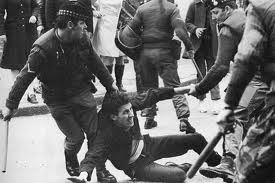 shots and the stench of smoke hung over the city as a bus or busses were hijacked at Smithfield bus station and set on fire. The guys who I got a lift with were from West Belfast and they spoke about friends being lifted from their houses in the early hours of the morning. The arrests were made only in catholic areas. Part of me had thought on hearing the news that maybe things would quieten down but I was assured that this was going to be a recruitment godsend for the IRA and things could only get worse. Over the next four days of horrendous violence about 24 people were killed. Looking back on that day I think I must have been quite brave to travel across the city on internment day. There were many days like that.
 Personally I think many manufacturers used it as an excuse to put the price of things up before an unsuspecting public got to grips with decimalisation.



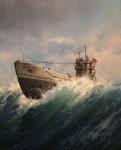 o what to do if the ship’s bell sounded four times. Getting into a life jacket was a difficult and uncomfortable manoeuvre. The train journey was no different as just outside London the train stopped. We were informed that an air raid was in progress and it was then that I began to have doubts about leaving a comfortable home and a reasonably good job.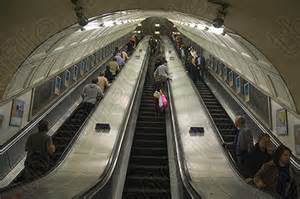


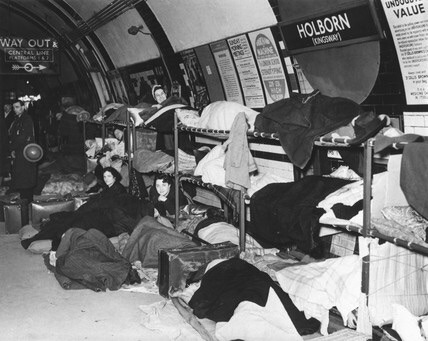


 CHATTER