TREE OF HOPE

image

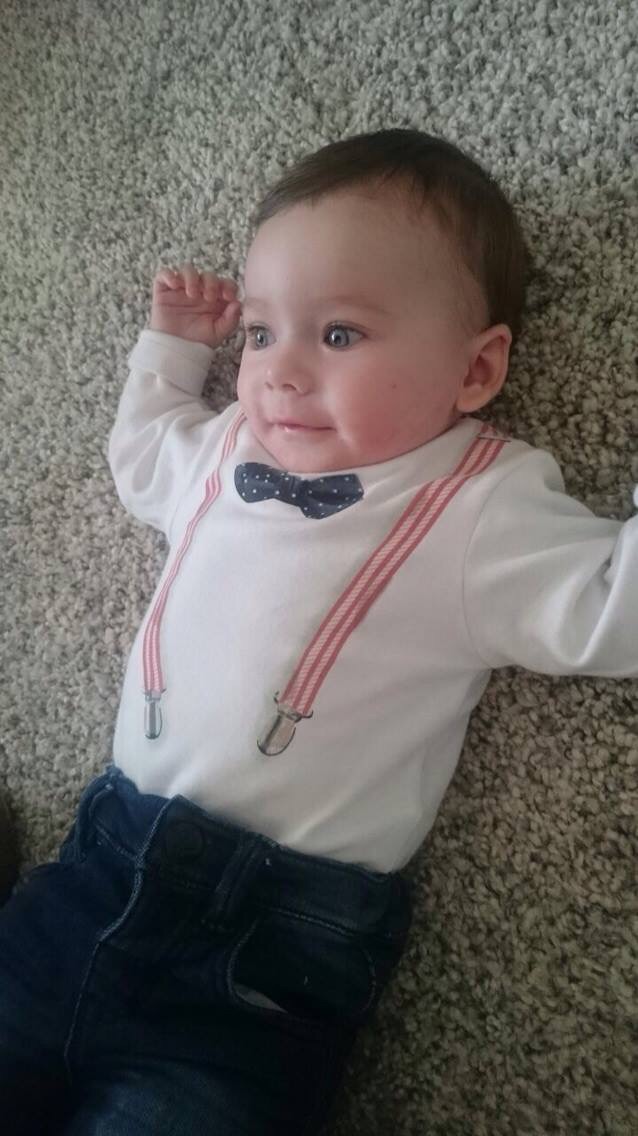
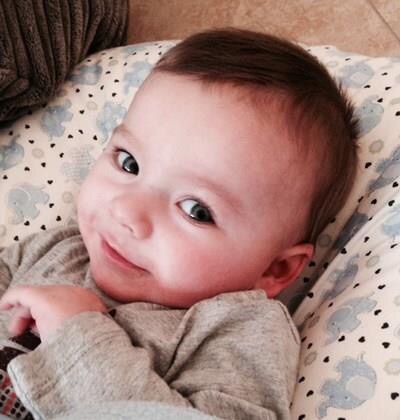
Patrick’s maternal side of the family hail from Rostrevor, Co Down. Patrick is a gorgeous little boy who has faced many problems in his short life but his ability to smile shows that he  has the tenacity to fight to achieve the milestones that many of us consider normal.

image image

Here is Ben’s story

Our son Patrick, who was born on 1 August 2014, suffered severe brain damage at birth. As a result of this tragedy Patrick has enormous challenges ahead and we are determined to give him the best shot at defying his prognosis, and we ask for your help to do so.

Patrick was born with no heart rate, blue and not breathing. It took over 10 minutes of resuscitation for him to take his first breath. Patrick was rushed to St. Mary’s hospital in London where he received “cooling” treatment for 72 hours, and during which time he could not breathe unassisted, was unable to suck or swallow, was fed by a tube and suffered major seizures. We didn’t get to hold him until he was over a week old. He spent three weeks in intensive care during which time he learned to feed orally, started to open his eyes and eventually we heard him cry. No parents were ever as happy to hear a child cry! Patrick had several EEGs, two MRIs, two lumbar punctures and numerous seizure medications before coming home with two terrified and exhausted parents. The MRI showed severe global damage to his brain, which was heartbreaking news for us and our families. Patrick has since had an early diagnosis of quadriplegic cerebral palsy with dystonia. We will not know the likely severity for years, but there is persuasive evidence that outcomes for children like Patrick can be improved with intensive early intervention from the right specialists. As a result, Patrick’s weeks are filled with a succession of appointments with physiotherapists, feeding specialists, gastro consultants, neurologists and many others.

We have learned so far in our journey that caring for a child with special needs is traumatic, exhausting and incredibly hard work. However, we are rewarded for the hard work when we see progress, like the first time Patrick reached out to grab a toy after months of holding toys in front of him, and we take great joy in seeing him achieve little “inchstones”.

Therapies cost a lot of money. We want to give Patrick the best opportunity to reach his potential and we need your help to get there. Please help us to do this by giving generously to Tree of Hope, and in doing so help to fund some of Patrick’s treatment and care needs over the coming years.

Please help us raise £50,000 for Tree of Hope to help Patrick receive therapies and treatments to support his long term physical and mental development.

Should we exceed the target amount (or if we do not raise enough funds, or if they cannot be used for any other reason) the funds raised will go to the general funds of Tree of Hope to assist other sick children.

Should you wish to donate to PJ’s fund go to http:// http://www.justgiving.com  Ben Jackson’s page.

Ann Allan: Memories No 2: Two Growing up in Rostrevor.

24966197-8745-4797-8CDE-81CC82F7068F.jpegIn 1950 George VI was on the throne. Northern Ireland was governed by Unionists under the leadership of Lord Brookeborough.

We never discussed politics at home or at least not in front of the children so we were oblivious to the nuances of the time. Until the attack at the bus depot, which I reckon was in 1956, we didn’t know EF2D5198-F1FB-4FF1-B98A-91C55153FD02what was going on in Northern Ireland politics. We were, I think what is now referred to as Castle Catholics. We were happy with the status quo but others around us were awakening to the fact that there was a need for change. Lord Brookeborough had in 1950 been Prime Minister for nearly 20 years. The explosion at the bus depot was the start of a bombing campaign along the border. I remember being in bed and hearing the loud explosion. The lights dimmed and we were all very frightened. However, the campaign fizzled out and for many years things remained calm, until a young preacher called Paisley appeared on the scene. He formed the Free Presbyterian church in 1951 and his sermons mostly focused on his contempt of Roman Catholicism and homosexuality. He didn’t get involved in politics until the late fifties, but he was to feature in the instability of Northern Ireland through the thirty years of the troubles.

The G.A.A. was an integral part of life growing up in Rostrevor.  Weekly football matches provided entertainment. My dad was a staunch GAA supporter and I accompanied him with my brothers to matches in Croke Park. I was there, when in 1961, Down won the all Ireland championship and brought the Sam Maguire Cup across the border. I remember waiting in Newry for the bus returning with the team and the cup. Unfortunately my interest in sport waned from then on but my dad and my brothers were staunch Down supporters. I was unaware of the fact that Gaelic football was a sport confined to the catholic community until I was a lot older.

I was actually very lucky being born in 1949. The war now over, the Labour F41BC61C-9BBD-40A5-AA46-D94EE31CBBD5government, with the vision of Aneurin Bevan introduced the National Health Service. The welfare state was introduced in the UK in 1948 and my siblings and I were able to enjoy the benefits of free education. Those, living in the United Kingdom, were now able to avail of free health care, from the cradle to the grave. With free education the way was open for those who wanted to better themselves and to challenge those who had held the majority of power at Stormont for almost 40 years. Unfortunately that didn’t work out to well and it was nearly thirty years before the Good Friday agreement was put in place guaranteeing equality for all citizens of Northern Ireland. However that agreement has stumbled along half heartedly and as a result has come to a stalemate and we are back to the pre 1998 days.

I had to avail of the  health service earlier than I would have wanted, when at age of seven, I was rushed to hospital with a septic appendix. I knew even at age seven I was seriously ill when a priest appeared at my bedside and administered the last rites. Never thought much of the Catholic Church after that. My opinion would be justified in years to come. What were they thinking? Frightening a seven-year old!  Unlike today, when most patients are discharged within twenty-four hours, I remained in hospital for two weeks, followed by bed rest for another two weeks at home. Visiting hours were extremely strict. I remember to this day feeling that while in hospital I had been abandoned by my parents and refusing to 063997B6-9278-4E01-9EE9-6DB30B970CF0speak to them when they did visit. Thankfully visiting restrictions were lifted or at least relaxed which made my second stay in hospital at the age of ten less traumatic. The local doctor called quite often during my convalescence and the district nurse called every day and administered intravenous antibiotics. Due to some misunderstanding the district nurse didn’t stop after two weeks and I received the injections for nearly a month.

My dad was the local town surveyor and many times I accompanied him while he worked. I often went with him to a water source at Kilfeaghan. A trek by car up the side of the mountain and then across a river. Then a long walk to make sure that the good people of Warrenpoint were not having any water problems. Well, with their drinking water anyway. At the top, in a ramshackle cottage lived a farmer called Dan White. He lived there through all weathers with his collie. He grew potatoes in the clean mountain soil. We left with bags of them and they were delicious, boiled in their skins and eaten with a knob of butter nothing like them in the shops today. He would walk into Rostrevor to do his shopping, carrying a large stick and with a large rucksack over his shoulder. His collie dog by his side. He smelt of burning wood from the fire in his cottage. I recently discovered that Dan’s cottage has been renovated and can now be rented out. A beautiful location for a holiday.

Check out Dan White’s Cottage on Facebook or at CA6ACC3F-ACEF-4F70-B275-649F270AA8BEhttps://www.facebook.com/DanWhitesCottage

We also had two lovely district nurses in Rostrevor in the fifties. One was my aunt, who sadly died from Motor Neurone Disease in the sixties but while she was able they used to take us girls from the local area on outings to a cottage beside Dans. We had picnics, played games and enjoyed the mountain air. A makeshift swing hung from one of the trees and many happy hours were spent swinging and pushing others.  I dread to think how many of us piled into the cars that took us there. It was also867267BF-0DA7-4A18-8A66-FCB45B992F9E my first introduction to an outside chemical toilet. After using it for the first time it became the practice to go before I came out or wait until I got home.

While on the mountain with my dad he used to scare us by telling us about an American plane that crashed in a bog on the mountain. He told us that their ghosts roamed the area and we had better watch out. It was very quiet up there and we were very gullible. It was also extremely marshy and I can remember many heart stopping moments when my wellies sunk into the bog. In later years I did learn that there was some truth in this and that an American plane had indeed crashed in the Mournes, only closer to Annalong. It was beautiful up there and we loved the feeling of freedom. 8ED7D9BB-8B35-4A20-BDD3-F5E8FFF678DD

Being the eldest in the family I tended to accompany my dad quite a bit and one of our trips during the period of rationing in Northern Ireland was to cross the Lough in a small boat to a ‘pop up shop’  opposite Narrow Water. There we could buy sugar, butter and other rationed items. I think my dad bought cigarettes although he wasn’t a big smoker but he did enjoy a cigar on a special occasion. There were no customs to check on the purchases unlike when we crossed the land border. Another crossing was from Warrenpoint to Omeath but that was usual for an afternoon out and a visit to cousins who had a pub and a hotel there. My cousins owned the Park Hotel and I remember spending a week there. Not exactly the Costa Brava but it was a change. We could look across the Lough and see home.  A fact that may not be well-known is that Padraig Pearse drafted the 1916 Proclamation while a teacher at the local Irish College, now the Park Hotel.

I also accompanied my father on a survey of the outlying districts of the area one summer in 1956 /57. We visited tiny little cottages where peat fires were lit in the kitchen and the lady of the house wore a long black dress with a shawl.  Chickens wandered in and out of the kitchens, there was no electricity and the toilet was an outhouse at the back. Coming from ‘the village’ I was amazed at the living conditions not realising how hard life was for them as they tried to make a living from the land.  The lanes and fields round these cottages smelt of wild flowers and on a sunny mikadohow_kettle_workssummer’s day it was idyllic. We brought a Volcano kettle with us and dad made us tea and we ate mikado biscuits.. Some things don’t change. You can still buy both the mikado biscuits and the Volcano kettle.

There were here many religious rituals in Rostrevor in the fifties and sixties.  Palm Sunday and we paraded with pieces of palm supposedly brought from the Holy Land. Corpus Christi, when there was a procession through the village to the Convent of the Apostles. Holy Thursday when I think we scattered petals. Christmas when we sang in the choir. We sang the mass in Latin in four parts and it was wonderful. After tea every evening we would be called by my dad to say the rosary. My brothers and I would kneel behind the couch were my dad couldn’t see us and we would giggle and carry on until he realised what was going on.

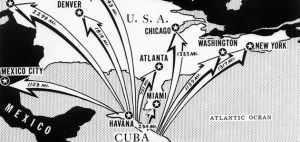
In November we had ‘devotions ‘every night in the local chapel and many nights I walked home on my own. On one occasion in November I was on my way home when someone rushed out of a shop visibly distressed. President Kennedy has been shot, they shouted. I was terrified. Did the Russians shoot him? This was, after all, the time of the Cold War. Did this mean war? By the time I reached home he was dead. My father had tears in his eyes as we clambered around the television  soaking up any news that BF531899-EB36-43D0-9C91-9E2B0E0B9164would mean that the assassination wasn’t going to result in a war. The following days were tense until it was established that on the face of it the Russians weren’t involved.

I remember life in the fifties as colourless. Everything was painted brown or green. The floors were covered in oilcloth. Everything symbolised the austerity of the time. Furniture was heavy and dreary, no bright colours. No Ikea in those days.   Rationing was still in force and Britain was recovering from the war. Flower power, the Beatles, Hippies, Mods and rockers were yet to influence us.


Áine McGrath: NI is No Place to be Gay

Posted on January 5, 2015 by http://vixenswithconvictions.com

IMG_2298

There’s nothing that goes down a storm in Northern Ireland quite like an all-out political ding-dong on the airwaves. Day and daily we can rely on our local broadcast media to provide a platform for people of all stripes to have their say – be they politicians, pundits or the public. Divisive issues are a favourite with producers and presenters of course, as they’re sure to guarantee a reaction and be a ratings hit – but at what cost?

Such was my line of thinking recently when yet another segment on BBC Radio Ulster’s Talkback show was dedicated to discussing marriage equality. I turned my car radio off when a caller began “This is a sad day for Scotland…”, a reference to Holyrood’s decision to make marriage available to same sex couples. I’m all for healthy debate, particularly so when members of the public are given the opportunity to have their say, however, I’m fearful now that Northern Ireland’s broadcast media fraternity isn’t fully aware of the wider implications of so frequently relying on such discussions, often to fill up airtime.

Let’s be very frank about this: Northern Ireland is no place to be gay. Insular thinking, religious fundamentalism and regressive attitudes towards sex and sexuality combine to make this a hostile place for anyone who identifies as anything other than heterosexual. Prejudice is in our lexicon, in our government and in our laws. In the past year I witnessed blatant homophobic prejudices being aired in my (now former) workplace by colleagues whom, when challenged, cranked up the rhetoric by shouting “THEY’RE DISGUSTING!” in reference to lesbian, gay, bisexual and transgendered people. In another case I chose to take my custom elsewhere when the manageress of an establishment I shopped in frequently, wistfully bemoaned the state of the country at the hands of the Westminster government because “They’ve even legalised HO-MO-SEX-U-AL-I-TY!” When I go to work, when I shop and when I turn on my radio I don’t want to have to listen to that sort of thing. How many people turn on their radio or TV to find, yet again, that their lives – their reality – is being thrashed out on a public platform yet again by the empathic, the intolerant and the ignorant? How many people who have heard such broadcasts have struggled for decades to come to terms with their sexuality and continue to live in suicidal shame for fear of coming out? How many young people listening to discussions on radio phone-in shows, or the words of some of Northern Ireland’s politicians, feel that they have no future because of their sexuality? I often wonder how many vulnerable people have been pushed over the edge by things they’ve heard in the course of “healthy debate” facilitated by the broadcast media. We’ll never know.

As a society, we must be mindful that when we are discussing issues such a marriage equality and conscience clauses in a public forum, we are not discussing abstract legal scenarios, paper exercises nor inanimate matter. We are discussing issues of human dignity. Often the manner in which these discussions are conducted, and the language that is used within them, does not reflect what is actually at the heart of the discussion: that is, real people, with real feelings and real emotions – people who are systematically treated less favourably by society and whose life opportunities are restricted simply because of irrational prejudices that belong to others. Yes, we need to challenge those prejudices – and they way to do that is via dialogue. To that end I have always appreciated the virtues of public discussion facilitated by the broadcast media, but now I’m looking at it through a different lens and considering the wider implications of its ethical shortcomings – most notably in the form of responsibilities that are sometimes compromised in the interests of popularity and programme ratings. It gives us all something to think about – and is surely a topic that’s ripe for public discussion in itself.

Ann Allan : There is no shame in being depressed.


Many people refuse to talk about how they are feeling for fear of being considered ‘loopy’ or ‘nuts’ or some other derogatory term. So is it any wonder when things start going downhill many try to keep it a secret.

I kept my depression hidden for some time . After a traumatic event in my life it took a couple of years to develop. It started very slowly. I was able to function, able to carry out the day to day activities and able to drag myself into work in the mornings. I appeared happy and could be the life and soul of any party. However on some occasions the mask slipped and on one occasion as I chaired a meeting, tears came from nowhere and I dissolved into uncontrollable sobs. My embarrassed colleagues were unsure what to do. On other occasions while sitting at my desk I would start to cry for no reason. I remember sitting with clients and a voice in my head saying ‘ I don’t want to be here, why am I here?’ I felt afraid and my heart started pounding and that is when I decided to see a doctor. My blood pressure was through the roof and he signed me off work. He recommended anti depressants but I refused. I came home and went to bed and that is mostly where I stayed over the next six months.

The panic attacks became more frequent and more debilitating. I refused to speak to friends on the phone. My family lived a long way off and appeared to be unaware what I was going through.  I barely held the home together and if it hadn’t been for someone coming into clean a couple of days a week we would never have managed. I lay in bed most days. My husband went to work and I just lay there. My thoughts were dark and confused. On a number of occasions I heard voices in my head. I reached the stage where the bang of a door or a sudden loud noise hurt. That is hard to explain but it was as if every nerve end was so sensitive that they reacted to noise. I was having two or three panic attacks every day and I couldn’t see a future. I was so desperate on one occasion that I tried the anti depressants but they made me violently ill and I decided I didn’t need that on top of what I was already suffering. I needed to see my doctor again in order to get a certificate for work.

I was very lucky that I made that appointment. It was a locum and he suggested that he should refer me to a counsellor. I could wait for an appointment or I could go privately and be seen relatively quickly, which I did. After 3 or 4 sessions I began to see some light at the end of the tunnel. I felt my mood beginning to lift and I followed his advice to set myself a project. My project, strange though it may seem, was to strip the pine woodwork in the hall removing all the white paint. At first I thought I can’t do this but by the third morning I couldn’t wait to get up and start work. It took me weeks but I loved it and everyday I could see the fruits of my labour. Gradually the black mist was lifting and I was beginning to feel normal again. The panic attacks had disappeared. My only medication was a beta blocker to help keep my blood pressure under control. Of course I can’t say this therapy will work for everyone but it worked for me.

My advice, however, would be to talk to someone as soon as you begin to feel that something is not quite right. Don’t let it take you over. Talk to a counsellor, talk to the Samaritans or talk to your doctor. There is no shame in being depressed and help is out there.

@amhNI Lifeline 0808 808 8000 or the Samaritans on 08457 90 90 90.

Áine McGrath:  A Rabbits Tale.


One day last week I was lifting a few spuds at the allotment and stopped to have a chat with a neighbouring plot holder.  As we stood there, I couldn’t help but notice out of the corner of my eye that there was a young wild rabbit sitting nearby, nibbling on some grass under a hawthorn hedge.  Silently foraging, it sat there in the sunshine, twitching its whiskers whilst it chewed on the blades of grass.  Eyes glistening, it was a beautiful thing to see – and to be so close to.  So as not to disturb it, I whispered to my friend “look – right there!” and gestured in the rabbit’s direction – not thinking that he wouldn’t be quite so keen to see it as I was…


I was horrified when my friend reached towards the ground and picked up a rock, about eight inches square.  Like a primitive hunter-gatherer, he eyed up the rabbit, growled under his breath and raised the rock up above his shoulder to take aim.


“NO!” I yelled, startling him into submission.  “What do you want to do that for?  Look at all the size of it – and look at the size of us!”  He was stunned and muttered “well…they come in and eat everything in sight!”, gesturing towards his plot.  Yes: I remembered then that wild rabbits had indeed found a way onto his allotment last summer and had particularly enjoyed his beans…


He went to take aim again.  “NO! DON’T DO IT!” I yelled again.  “Look” I said, “that wee rabbit’s only doing what comes naturally to it.  It spends its day searching for food, then it goes home to its burrow and makes baby rabbits.  That’s all they do – that’s all they’re supposed to do.  This is its home, its natural environment.  WE’RE the ones who are upsetting the natural order of things here!  We each have a wee strip of ground that we grow stuff on in a concentrated, cultivated fashion, and those wee rabbits come in here and see all of this and think “waaa-hey!”  We’re practically laying out a buffet for them – yet we persecute them for following their instinct!”


Unable to keep from smiling, he looked at me and said “uuuurrrgghhhh!!!  You bloody big softie!  I’d never thought of it that way before…”  Laughing, he threw the rock away and left the rabbit to eat in peace.


Incidences such as our encounter with the rabbit serve to remind us that life does not revolve around our own personal needs and desires.  There are always other people, or other things, to consider, and every choice that we are faced with presents us with an opportunity to generate a positive or negative outcome.  The truth is that we can’t make informed, responsible decisions without considering the perspective of all of the parties concerned – even if it is only that of a young wild rabbit!  Just because a situation directly affects us, it doesn’t mean to say that ours is the only viewpoint that matters.  In every sphere of life, there will always be other viewpoints – and they will always be equally as valid as the one(s) that pertain to our own personal selves.  Just take a quick look down the headlines that are making the news today.  How many differing viewpoints do you see?  How much compromise do you see?  It makes me wonder, just how many of those people making the news today could benefit from watching baby rabbits…

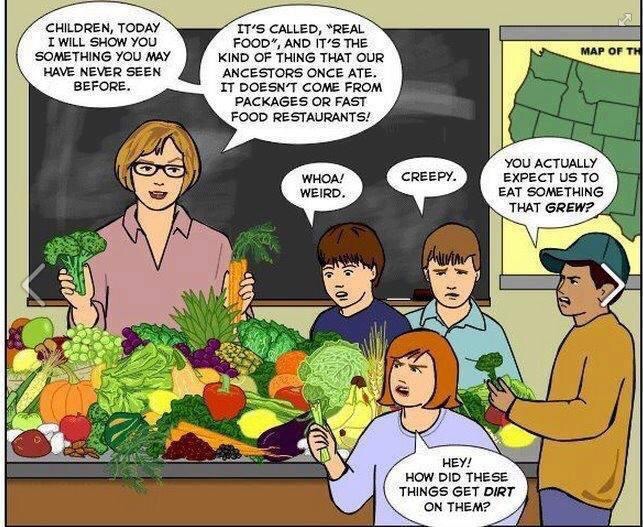
Áine McGrath: Is Real Food Weird ?

I remember one day a few years ago, I went to buy spuds from a local farmer who sold the produce he grew from a hayshed at the back of his house. We were chittering away when a middle-aged woman pulled up in a big Merc. She got out and with a plum in her gub she said,

“I’d like to buy sahm of yohr po-TAY-toes.”

The farmer explained that he had some freshly dug Navans and gestured towards some that he was in the process of bagging. A look of contempt crept across her face as she replied with the plum in her gub

“Oeh my GOOD-ness! They’re DER-TEH! I’ll goeh to Mahks and Spincah instead.”

The farmer and I struggled to keep our faces straight as she jumped back into the big Merc and sped off to Marksies. In this sanitised world we live in, adults are just as detached from the essential tenets of survival as the children in this cartoon are…

Out of the Adoption Box by Anon.

“In all of us there is a hunger, marrow deep, to know our heritage – to know who we are and where we came from. Without this enriching knowledge, there is a hollow yearning. No matter what our attainments in life, there is still a vacuum, an emptiness, and the most disquieting loneliness”.

– Alex Haley

I entered this world in late 1971, born to a single mother in her early twenties. I was given up for adoption and placed with my adoptive parents in early 1972. I don’t remember at what age I was told that I was adopted but I do remember being read a story from a book that was used at that time for adoptive parents. The book was used to explain to adopted children why they were “chosen”, “special” etc and how they as a family all lived “happily ever after…”

My family consists of my mother, father and an older brother and sister who were also adopted. The three of us were from different birth mothers.

During my childhood I was made to feel different because my family members bore no physical resemblance to one another. When out and about meeting new people we were constantly reminded of this. People would say things like ” oh, you couldn’t be related, sure you don’t look alike…” These comments continued through primary and grammar school and my sister and I were told the same by friends and teachers. Consequently, from quite a young age I felt “different” and was always embarrassed that we stood out so much as a family.

Apart from that, I would describe my early childhood as happy enough, doing the normal things that children do with their families and friends. Thinking of my natural mother is not something that I remember during those early years.
As I grew into adolescence and early adulthood, I started thinking about my natural mother more and more. She was always on my mind. Every birthday and at various times over the following years I would go through periods of wanting to find her. I would often picture our reunion in my head and what it would be like for both of us. Equally, there were a lot of times when I was angry with her and wondered why I would want to meet her when she had given me away. Surely if she really wanted to keep me she would have found a way.

The main reasons that hold adoptee adults back from finding their natural mother is the fear of rejection again and that in most cases she will have married and have had a family.  Chances are they may never told anyone about you,  although, their parents and siblings would have been told at the time of pregnancy. As a result, you think that they are not going to want you upsetting their lives. The other big factor is the huge guilt that you bear for your adoptive parents. These two people have given you everything in life and yet deep in your heart all you want is your “mummy”.

Four years ago aged 39, I reached the stage where I had a real desire to make contact with my natural mother. My identity and heritage started to mean more to me, which I think is probably something that comes with getting older. I also needed to know if there was any medical conditions of a genetically inherited nature that I should know about.
I made contact with Social Services, found out my mother’s name, age at birth, where she had come from and where I was born. This was the only information that I was given.

Deciding what to do caused me huge anxiety. I had all sorts of thoughts going through my head, I was afraid of upsetting my birth mother’s life and also that of my adoptive parents. I knew that if I found my birth mother and all went well, than my relationship with my parents would never be the same again and they could be deeply hurt. I had also read about cases where adoptee adults had got in touch with their natural mother only to find out several months down the line that they didn’t connect and didn’t want to keep in touch. Added to this was the fact that my sister had not had a successful reunion with her birth mother who rejected her again. My brother was in a similar situation. After a lot of thought I felt that perhaps this was something that for all concerned was best left in a “box” unopened.

However, I knew this wasn’t really what I wanted so I continued to look for her on and off through Internet searches. I was hoping to find even a photograph. On my last birthday I looked her up again on the Internet only to find her obituary. You can imagine the distress and upset this caused me. The final realisation that I would never get to meet my mummy opened up the “box” that I had kept all my feelings in for a long number of years. This has resulted in me needing counselling and medication to help me cope emotionally with the huge loss. In fact I have suffered from mild depression for a number of years, which I now realise, has been linked to my adoption. Because of the stigma of mental illness I have never talked to anyone about this except my husband. I just battled on keeping it in its “box”.

You see, for me as an adoptee adult, it is not only the loss of never having had the mummy that I should have had, but of a whole life with the extended family with whom I should have been brought up. People who I would have looked like, shared personality with, shared mannerisms, had things in common with, all those simple things that “normal” families take for granted. I am left at 43 years of age with adoptive parents who whilst they raised me very well and have always loved me, I do not feel a connection. Through counselling I understand that there would be no connection, as such, because I am not theirs in that sense and so therefore can’t have any of their personality etc. It has also been explained to me that it is a bit of a lottery as to who adopts you and what type of people they are. There are people who are adopted and have a very happy life with their adoptive parents and never feel the need to look for their natural mother. We are not a close family and have never been, though my parents would think we are. I did try over the years to do things with my adoptive mother but gave up about ten years ago because we have  nothing in common and we are completely different people. For many years now my biggest regret is the loss of having a lovely Mum that I could go for coffee with, have a day out at a spa, go shopping and have fun, like lots of other mother/daughter relationships. That includes my own relationship with my daughter. I appreciate that there may be people reading this who have their natural mums and don’t get on with them, but at least they are your mums, I never got that chance.

I will be forever grateful to my parents for all they have done for me. However my adoption was never right and should never have happened simply because my mummy became pregnant at a time when it was frowned upon by the Catholic Church.

I do support adoption in cases were people are not fit to raise children or where they have been abused. However my mummy would have been perfectly able. It was just in those days it was an embarrassment to families for their daughters to be pregnant. This makes the whole thing so sad. I am happy that in modern adoptions there is a link maintained in some form with the natural mother.

On a happier note, I have now been reunited with my natural Aunt who is the most amazing person to come into my life and we connected immediately. They are, as a family, extremely sorry for what happened and acknowledge that my adoption should never have happened. I have found out lots of things about my mummy, my grandparents and extended family. I have an album of the most beautiful photographs of her and most special of all is that I have some of her jewellery and several handwritten letters. My mummy wrote these at the time of the adoption when she was trying so hard to find ways of keeping me. I have also met a cousin, his wife and children and there are plans to meet other uncles and cousins over the Spring/Summer. It is so good to finally see someone who I resemble and my daughter who will soon be twenty-five is very like my mummy. It is wonderful to finally know my heritage and for my daughter and some day my grandchildren to know theirs. I can now be who I am. What I find so sad is that my mummy did go on to marry but had no more children. I can’t imagine how she got through her life living with the fact that her only child had to be given up for adoption simply because it was an embarrassment.

What I want to say to any adoptee adults out there like myself is: Please, if you want to find your mummy stop thinking and worrying about it and just do it now. Please stop feeling guilty about your adoptive parents. Don’t feel that you are doing something wrong in hurting them. Put yourself first because this was never your fault. I can’t promise that it will be a happy reunion but at least you will have tried. My failure to do so will be the biggest regret of my life and I am struggling to come to terms with that.

To anyone who is judging me because of my feelings towards my adoptive parents, I would say it’s not as simple as two people raising you and loving you all your life. Remember they chose to adopt and always knew that their children had a heritage of their own and some day would want to find their natural families. We have a right and a need to do so. My parents are not the type who ever talked about the adoption, nor did they actively encourage us later in life to find our natural mothers. I understand this is because of their fear of loss but I feel this is selfish on their part. Please think how you would feel if you had been sent off to another family. Babies deserve to be brought up by their mummy.

And finally to any families who have fallen out. Life’s too short. Make amends and be thankful that you all have each other. What I would give to have had the family in my life that I should have had.

Name has being withheld to protect families involved. For help and advice contact:

http://www.familycaresociety.co.uk

http://www.samaritans.org

http://www.adoption.org


Being Mindful of Success by Áine McGrath

Often I find myself thinking in depth about modern living and the effect it has on the human psyche. I’ve written about it extensively in my journals for several years now, exploring the symptoms and reflecting on the effects of constructed social norms that have corrupted basic human happiness. We live in a high octane, fast-paced world that’s fuelled by stress generated by fickle man-made standards that equate to smoke and mirrors. “Success” is defined in monetary and material terms – but if we take a bit of time to examine what’s really going on we can see that “success” in the modern world is something very different indeed.

Where is the success in having a career that demands all of our time, leaving us with no room to enjoy quality moments with the people with whom we feel real and completely at ease? Is there really success in a job that brings nothing but deadlines, isolation and stress into our lives? Do our demands for “rights”, accountability and retribution become obstacles to our own peace of mind? Are our priorities all wrong?

It pays dividends to take a little bit of time out of every day for the purpose of lone reflection. Sitting still, listening to the sounds that are going on around us, feeling the sensations in our body as we sit quietly and allow our minds to gently settle brings a certain sense of perspective into our chaotic lives. Some people call these windows of reflection “meditation”. It should come naturally to us, but we’ve become so conditioned by socially
constructed chaos that this most natural of human phenomena has become almost impossible for us to access. With that in mind, I’m inclined to believe that true success in life is remaining spiritually and emotionally healthy in a world where our buttons are being pushed 24/7. Breaking the mould and nurturing our own uniqueness has become the exception rather than the rule – and it requires self-awareness and spiritual awakening of the kind that can only be rooted in true inner calmness. It’s difficult to achieve that when we’re constantly surrounded by other people and the majority of our time is taken up with worldly “obligations”. Making time to practice mindfulness at some point in our day helps us to filter out all the background noise, the chaos and the unnecessary demands of modern living with the result that we find a sense of perspective on the world we live in – and how to survive within it. It’s a lifeskill that’s definitely worth having. 🙂

IMG_2298-0


Denise O’Neill: Let’s Celebrate Getting Older

Let’s celebrate getting older – it’s a normal part of living!

What is happening to the human species?

Is there a human disease or illness called ‘ageing’, a condition that must be eradicated at all costs? How do we cure this horrible disease/illness? Never fear—we have been informed that there are many treatments available to eliminate and prevent it happening to us: face/neck lift, brow lift, eye bag removal, fillers, Botox injections, micro dermabrasion, laser treatment, chemical peel, lip plumping and, not forgetting, lotions and creams. So we are OK and all is well with the world.

But, wait a minute … isn’t ageing a normal and natural process? We all get wrinkles, jowls, laughter lines, baggy eyes, etc, as time goes on. We all age differently depending on our genes, sun or cold weather exposure, lack of sleep, cigarette smoking, drinking alcohol, stress and illness. But, we all age—a fact of life.

Let’s look at faces and how we perceive ourselves. When we study ourselves in the mirror or look at photographs what we see are two-dimensional images and we tend to judge ourselves quite harshly. All we see are the lines, blemishes and loose and saggy skin. But, we don’t see ourselves the way others see us. We don’t see the three-dimensional, all-encompassing us—our characteristics, our movements, how we communicate. We communicate with our faces more than we ever realise to show all sorts of emotions including happiness, love, elation, shock, worry and sadness. When we fill the lines and wrinkles and tighten up the sagging skin, we take away the facial communication. Faces become puffed, frozen, expressionless, alien-like and that special factor unique to each one of us, known as character, disappears.

So, we have a situation now in society where we have been brainwashed into thinking that we must strive to look young in order to be happy and successful. We are bombarded with images in all forms of media that have been ‘photoshopped’ to the max. What we see are not real images of real people. This is leading to many opting for the ‘cures’ stated above which is a growing and, in my view, a worrying trend. And, what is more worrying is the fact that younger people are having ‘work’ done.

What angers me is that many in the booming cosmetic procedures industry are making mega bucks from people falling for their promises that life will be wonderful if they were to look 10 years younger. And, for those who pretend not to have had procedures, we are not fools—we can tell who has had work done. It’s as plain as the nose on your face (sorry, couldn’t resist the pun). We also don’t know, from a medical and psychological point of view, what the long-term effects of these procedures are.

If people wish to avail of the processes to eliminate the signs of ageing, that is their choice. But what we really need is a revolution that says ageing is positive. We need a change of mind-set to get back to celebrating the beauty of getting older. Let’s see images in the media of real people, with real wrinkles, jowls and laughter lines. Our faces belong to each of us and the characteristics we have developed are evidence that we have lived, that we are continuing to evolve, that we are wiser, and that life is good to the very end.

I am also passionate about grey as a choice for women but that is another story…Check out http://www.greyisok.blogspot.co.uk

Photo by Catherine McIlkenny.

Ann Allan: NHS Lack of Communication?

Sunday saw me sitting in our local out of hours department. I had been in agony all weekend with a strained shoulder blade. My blood pressure was also extremely high and I thought it prudent to seek medical advice. An appointment was made for 2pm by a doctor who had phoned me to find out what was wrong.
After waiting about a half an hour I was seen by a different doctor. I explained my symptoms once again and was examined. My BP was still ridiculously high and the Doctor requested permission to access my medical records. I agreed.  She was efficient, thorough and caring despite having a large number of patients waiting. After being prescribed a short course of medication I was advised to see my own doctor the next day in order to have a long term prescription filled out. Imagine my surprise when I attended my own doctors surgery on Monday only to find that the computer system only works one way. The out of hours doctors could assess my information but my own doctors couldn’t assess what the out of hours doctors had added to my notes. They had to wait for a written report. What sort of a system is this and how much of the out of hours doctor’s time is involved in writing out reports? Does it leave room for errors and a delay in following up patients who have presented to the out of hours doctors?