
2015 was not a great year from a personal point of view. Three close family members diagnosed with cancer, one of whom is sadly no longer with us. It hits us all and very few families are immune from it. Because of this I was very honoured to be allowed to write a blog on behalf of Pancreatic Awareness month and as a tribute to my friend Olive who is bravely facing up to fighting the disease. Love  you Olive. I was thrilled to see that the blog was seen by over 59,000 people, not all reading it, but being aware of it and perhaps following it up at a later date. This was helped by Eamon Holmes, Marian Keyes and Slugger 0’Toole sharing. Thank you.
Edwin Poot’s recent comments about Arlene Foster reminded me of an interview I did back in the late seventies. I applied to the BBC as an audience researcher. During the interview I was asked if I had a family. Replying that I had two young children I was asked who would look after them while I was working, something that would be unlawful to ask today. I somewhat cheekily replied that I didn’t think that I should be asked a question like that and challenged that I wouldn’t have been asked that if I had been a man. I resigned myself to have blown my chance of a job but was surprised and delighted to get a phone call to say I was successful. No matter what Mr. Poots says I still believe there was a underlying message to Arlene Foster saying “Don’t forget you are a woman and the bible says your place is in the home.This post should have gone to a man.”
It is refreshing to see a woman in charge but for those of us who feel it’s time to come into the 21st Century and come into line with other regions of the U.K., I feel we are going to be disappointed. Legalising same sex marriage and relaxing the abortion laws are still going to be a big challenge and I think we may be clutching at straws if we think things may change with a women in charge. I hope that Arelene gives a free vote and abandons any thoughts of resorting to petitions of concern. However the DUP is influenced by a large number of fundamentalists and I dare say they will fight it tooth and nail and I’m not sure that Arlene will go against the cabal.
Elections are looming. I had hoped when I threw my weight behind NI21 that it would be fielding candidates in every constituency for the upcoming election. No point in looking back on what happened. I have no idea what, if anything, is happening but as far as I’m aware there has been no communication with members for over a year. I have no idea if Basil will be reelected but it would help if the Assembly committee’s report into the coming and goings of NI 21 was made public as soon as possible. So I will have to think carefully as to whom I’m going to vote for, but the Green Party are certainly in the running.
The world is in a sad state at the moment. Millions have been displaced. There are children literally starving to death because of wars devastating their countries. I have listened to arguments for and against bringing in refugees to mainly European countries and I honestly don’t know if that is the answer. Surely we need to put more effort to stabilzing Syria, rebuilding the infrastructure and getting accommodation sorted for those who want to return. But let’s not get it out of proportion. History shows that the world has always been in turmoil and the common factor is religion. An ideology that so many embrace has been anything but good for mankind.
On a lighter note, I have just about got used to my new teeth. My sore back eventually eased but not without a bit of a bump in the hubby’s car. I was given pain killers to relieve the pain. As someone who can fall asleep on two co-codomol I was unaware of the strength of the tablets. As I sat in the driveway listening to Talkback I obviously was in drive and not park. ( It’s an automatic). Suddenly I saw a summer seat coming towards the car. As I realised what was happening I braked and turned off the engine. Getting out I realised that the summer seat was firmly lodged under the car ( which to make matters worse was already traded in). A rather awkward phone call to the hubby phone followed.

” Er … could you come home, the summer seat is lodged in the front of the car and I can’t get it out.” ” ‼️⁉️🗣🗣🗣” I can’t repeat what the reply was. After dismantling the seat and removing the number plate the damage wasn’t too bad but it was a warning to me that you shouldn’t drive while taking medication if you are unsure how it affects you and certainly not in the hubby’s car.
I’ve been on the steering committee for OpenGovNI since its conception and have been helping to bring awareness to the organisation through my blogs. I’m happy to be going forward with the newly elected committee. Our aim is to deliver a more open, transparent and accountable government and to give citizens the power to shape decisions that impact on their live. When we look back at the various scandals in 2015 we really need more openness from our politicians. There are a good cross section of members on the new committee from many diverse backgrounds and many events are planned for 2016. The first one being :
Click to access NIOGN-Seminar-Series-James-Orr.pdf
There are many challenges for us all in 2016. On a world wide scale there is the threat from Isis, the management of the biggest migration of people in our life time but there are also many local issues, some of which are dragging on year on year. I really wish we stopped looking back on celebrating the past and moved forward with planning a better future. I hope whatever is happening with you, 2016, is a happy and healthy year for you. Thanks to those of you who have continued to read my blogs.
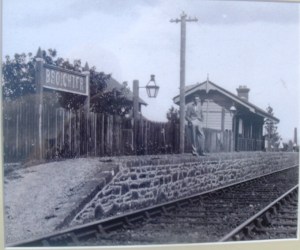 near Limavady in 1886. She was one of 12 children and her father was the Station Master. Agnes his wife was the Post Mistress. The station house was not suitable for 12 children. It was riddled with damp and one by one the children succumbed to TB until only two were left, Margaret and her sister Hilda. They were beautiful children and the apple of their daddy’s eye. William was in his late forties when the two little girls were born and having buried the other ten he cherished and protected them as best he could. Every day, the train passed by their house rattling the windows and shaking the house. When they were young they would cry and William would comfort them but as they grew older they loved to hear the train coming and would rush out to see the passengers as they disembarked. A donkey and cart would be waiting to take them to their destination.
 CHATTER